
Sometimes the most powerful thing one person can do for another is simply show up.
Not with advice. Not with answers. Just with presence. It could be a text, a walk, a question asked with genuine care. It sounds small. It isn’t.
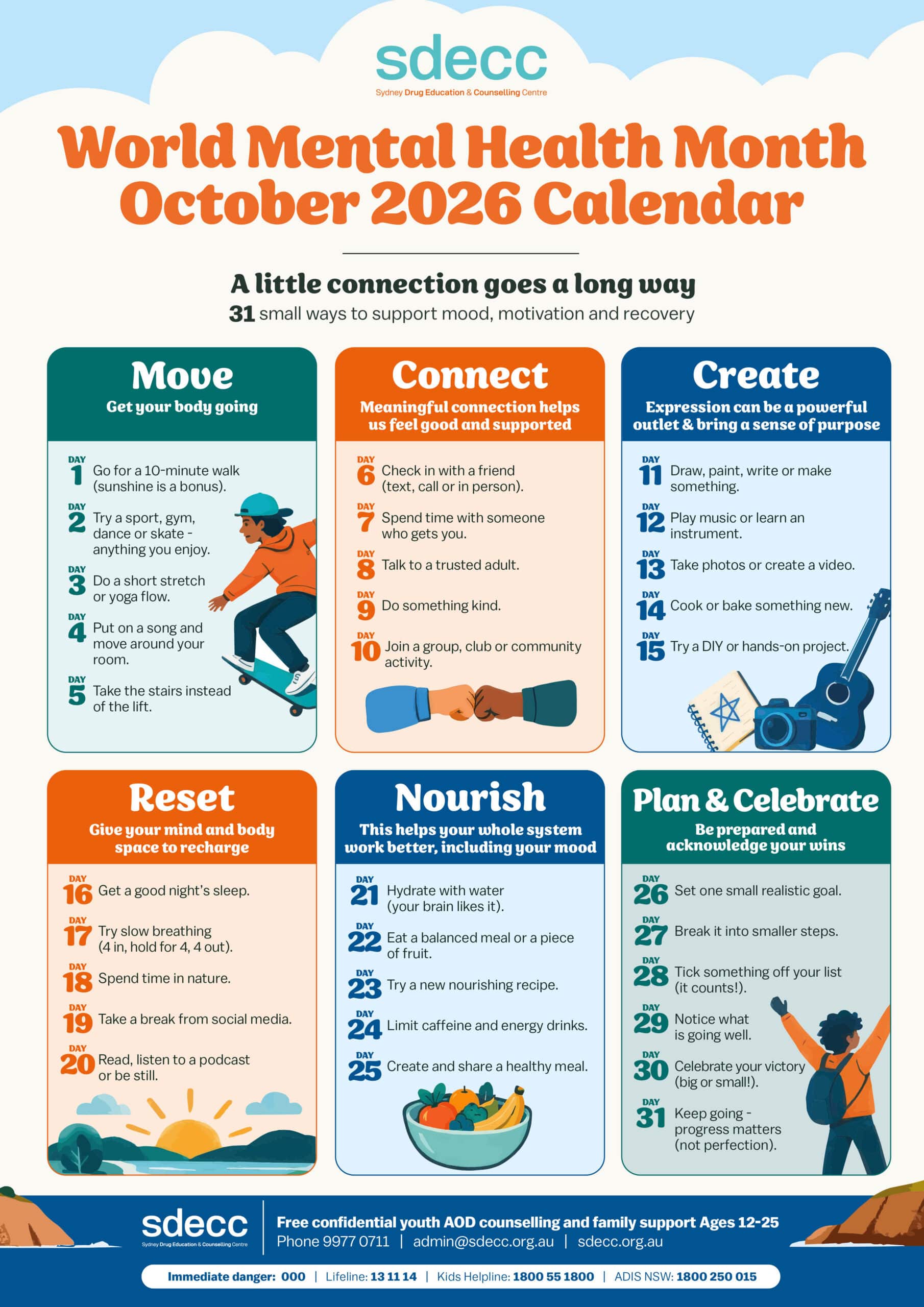
For a young person navigating a difficult stretch, a moment of real connection can shift everything. That belief sits at the heart of SDECC’s 2026 World Mental Health Month Calendar, a tradition started by our CEO and clinical psychologist Dominique Robert-Hendren, who each October shares 31 practical, everyday actions to help young people and their families build wellbeing, one day at a time.
“Connection creates safety,” Dominique says. “When someone feels seen and not alone, they’re more likely to reach out, to open up, and to take the small steps that matter. A little connection really can go a long way.”
This year’s theme in Australia is Together We Thrive. It’s a reminder that wellbeing isn’t something any of us build in isolation. It grows through community, through everyday acts of care, and through the courage to check in on the people around us.
The calendar offers one small action for every day in October that can be carried throughout the year too. Grouped across six simple themes, none of them require much and all of them can help.
Move (Days 1 to 5)
Our bodies and minds are more connected than we often realise. Movement, even gentle, unstructured movement, can shift mood, clear the head, and help us feel more grounded.
The first five days of the calendar invite young people to move in ways that feel good to them. That might be a ten-minute walk in the sunshine, trying a sport or dance class they’ve been curious about, a short stretch before bed, putting on a favourite song and moving around the room, or simply choosing the stairs.
None of it needs to look like exercise. It just needs to feel like something.
“Movement doesn’t have to be intense or structured to be helpful,” Dominique says. “Sometimes it’s just about getting the body going and noticing how that feels.”
Connect (Days 6 to 10)
Meaningful connection is one of the strongest protective factors for mental health. Genuine, human contact with people who make us feel less alone.
Days 6 to 10 encourage young people to check in with a friend, spend time with someone who truly gets them, talk to a trusted adult, do something kind for someone else, or join a group, club or community activity they enjoy.
Simple actions. Significant impact.
“We see it in our work every day,” Dominique reflects. “A single conversation with the right person at the right time can be a turning point. You don’t need to have all the answers — you just need to show up.”
Create (Days 11 to 15)
Creativity is a powerful outlet and is available to everyone not just artistic or creative types.
The Create theme invites young people to draw, paint, write or make something with their hands; play music or pick up an instrument; take photos or film a short video; cook or bake something new; or try a DIY or hands-on project.
Creating something shifts focus outward. It gives us a sense of agency and purpose, which matter a great deal for mental health and for building resilience over time.
Reset (Days 16 to 20)
Rest is not laziness. Recovery is not weakness. Giving the mind and body space to recharge is supportive to health and wellbeing.
The Reset theme covers the basics, such as getting a good night’s sleep, trying slow breathing (four counts in, hold for four, four counts out), spending time in nature, taking a break from social media and making room to simply be still (reading, listening to a podcast or sitting quietly).
“Young people are under enormous pressure,” Dominique says. “Giving themselves permission to slow down, even for a few minutes, isn’t indulgent, it’s necessary.”
Nourish (Days 21 to 25)
How we fuel our bodies matters more than we might think. Food, hydration and what we put into our bodies all affect how we feel, how we sleep and how we cope.
Days 21 to 25 encourage young people to drink more water, eat a balanced meal or a piece of fruit, try a nourishing new recipe, limit caffeine and energy drinks and share a healthy meal with someone they care about.
That last one quietly brings us back to connection. A shared meal can be an opportunity for connection.
Plan and Celebrate (Days 26 to 31)
The final theme is about momentum and about recognising that progress matters, even when it’s imperfect.
Over the last six days of October, young people are invited to set one small, realistic goal; break it into smaller steps; tick something off their list; notice what’s going well; celebrate a win (big or small); and keep going.
“It’s sometimes easier to focus on what we haven’t done,” Dominique says. “Yet noticing what is going well, acknowledging even small steps forward, builds the kind of confidence and self-belief that supports mental health over time.”
A little connection, every day
The World Mental Health Month Calendar isn’t about overhauling a life. It’s about small, intentional acts of care for yourself and for the people around you.
Together, those small acts add up. They build connection, resilience and hope. They remind young people that they’re not alone, and that the people in their lives are paying attention.
As Dominique puts it, “A little connection really can go a long way.”
If you or a young person in your life could use some extra support this October and beyond, SDECC offers free, confidential counselling for people aged 12 to 25 and their families in Northern Sydney. No referral or Medicare card is needed. Call us on (02) 9977 0711 or visit sdecc.org.au.
Where to get help
If there is an immediate risk to someone’s safety, call 000.
- Lifeline: 13 11 14
- Kids Helpline: 1800 55 1800
- Mental Health Line (NSW): 1800 011 511
- National Alcohol and Other Drug Hotline: 1800 250 015
- 13YARN: 13 92 76
- eheadspace online chat: headspace.org.au