By Dominique Robert-Hendren, CEO and Clinical Psychologist, SDECC
World Mental Health Day on 10 October is a timely reminder that awareness, while important, is not enough. The 2026 global theme, “Lived Experiences Heard: Real Voices, Real Change”, asks us to go further: to ensure people with lived experience are not simply invited to tell their stories, but are supported to shape the policies, services and decisions that affect their lives.
In Australia, Mental Health Australia’s theme, “Together We Thrive”, reinforces the same truth from another angle. Mental health is not created or restored in isolation. It is strengthened through connection, belonging, safety and access to the right support at the right time.
For those of us working with young people, these themes are especially urgent. They challenge services, leaders and communities to listen differently, share power more deliberately and translate what young people tell us into visible change.
The figures are a call to act
Australia’s latest national data paints a confronting picture. The Australian Institute of Health and Welfare reports that the proportion of 16–24-year-olds experiencing a mental disorder rose from 26% in 2007 to almost 39% in 2020–2022. Anxiety disorders remain the most common conditions among young people, while cost, long waiting times and limited service availability continue to restrict access to care.
The 2025 Mission Australia Youth Survey adds the voices behind those numbers. More than 17,000 young people aged 14–19 participated. Cost of living was identified as the nation’s most important issue by 64% of respondents; 39% reported stress related to their mental health and wellbeing; and 19% were experiencing high psychological distress. Yet the survey also identified important protective factors: 75% said they had someone to turn to when unsure about an important decision, and many remained hopeful about their future.
This is not a story of a generation lacking resilience. It is a story of young people navigating sustained economic pressure, study demands, housing insecurity, discrimination, online intensity and fragmented systems of care. Their distress cannot be separated from the conditions in which they are growing up.
Mental health and alcohol and other drug support must not sit in silos
At SDECC, we see how mental health, relationships, family stress and alcohol and other drug use can intersect. For some young people, substance use is experimental or social. For others, it becomes a way of coping with anxiety, trauma, loneliness or distress. If services respond to only one part of that experience, we risk missing the person in front of us.
Current AIHW data also requires a balanced response. Alcohol and other drug use among young people is less common overall than it was in 2001, and daily smoking among 18–24-year-olds has fallen substantially. At the same time, lifetime e-cigarette use among 18–24-year-olds increased from 19% in 2016 to 49% in 2022–2023, and recent illicit drug use in this age group rose from 27% in 2007 to 35% in 2022–2023. Among 10–19-year-olds receiving specialist treatment for their own drug use in 2024–25, cannabis was the most common principal drug of concern.
These trends demand responses that are evidence-based, developmentally appropriate and free from shame. Young people need integrated care that recognises mental health and substance use as connected, while also attending to family relationships, culture, education, housing and community.
Lived experience is expertise
Meaningful engagement is not a consultation at the end of a project. It means involving people with lived experience from the beginning in defining the problem, designing and delivering the response, and evaluating whether it made a difference. It also means recognising that no single person can represent every experience.
For organisations, this requires more than good intentions. Young people and families need accessible ways to contribute, clear information about how their input will be used, appropriate support, and feedback about what changed. Where people are asked to contribute expertise, that contribution should be respected and, where appropriate, remunerated.
Clinical expertise, research evidence and lived experience should not be positioned in competition. Strong services bring them together. Each reveals something the others cannot see on its own.
What real change looks like
For leaders, commissioners and service providers, World Mental Health Day should prompt practical commitments:
- Share decision-making power. Include young people and families in governance, service design, workforce development and evaluation – not only in storytelling roles.
- Build connected pathways. Make it easier for young people to move between mental health, alcohol and other drug, primary care, housing, education and family supports without repeatedly retelling their story.
- Invest early. Offer support before distress escalates, including outreach, family-inclusive care and low-barrier community options.
- Design for equity. Address the additional barriers experienced by First Nations young people, LGBTIQA+ young people, culturally diverse communities, young people with disability, and those living in regional and remote areas.
- Measure what matters. Looking beyond activity counts to outcomes young people value: feeling heard, safer, more connected, more hopeful and better able to participate in everyday life.
From listening to accountability
The most important word in the 2026 global theme may be “change”. Listening has value only when it influences what happens next.
As a CEO and clinical psychologist, I believe our responsibility is to create services in which young people are met with curiosity rather than judgement, and where their knowledge of their own lives is treated as essential evidence. We must also be honest about the limits of individual coping strategies when structural pressures remain unaddressed.
This World Mental Health Day, let us move beyond asking young people to be resilient within systems that are difficult to navigate. Let us build systems worthy of their trust: connected, accessible, culturally safe, responsive to mental health and alcohol and other drug needs, and shaped with the people who use them.
Real voices must lead to real decisions. Real decisions must lead to real change. That is how, together, we thrive.
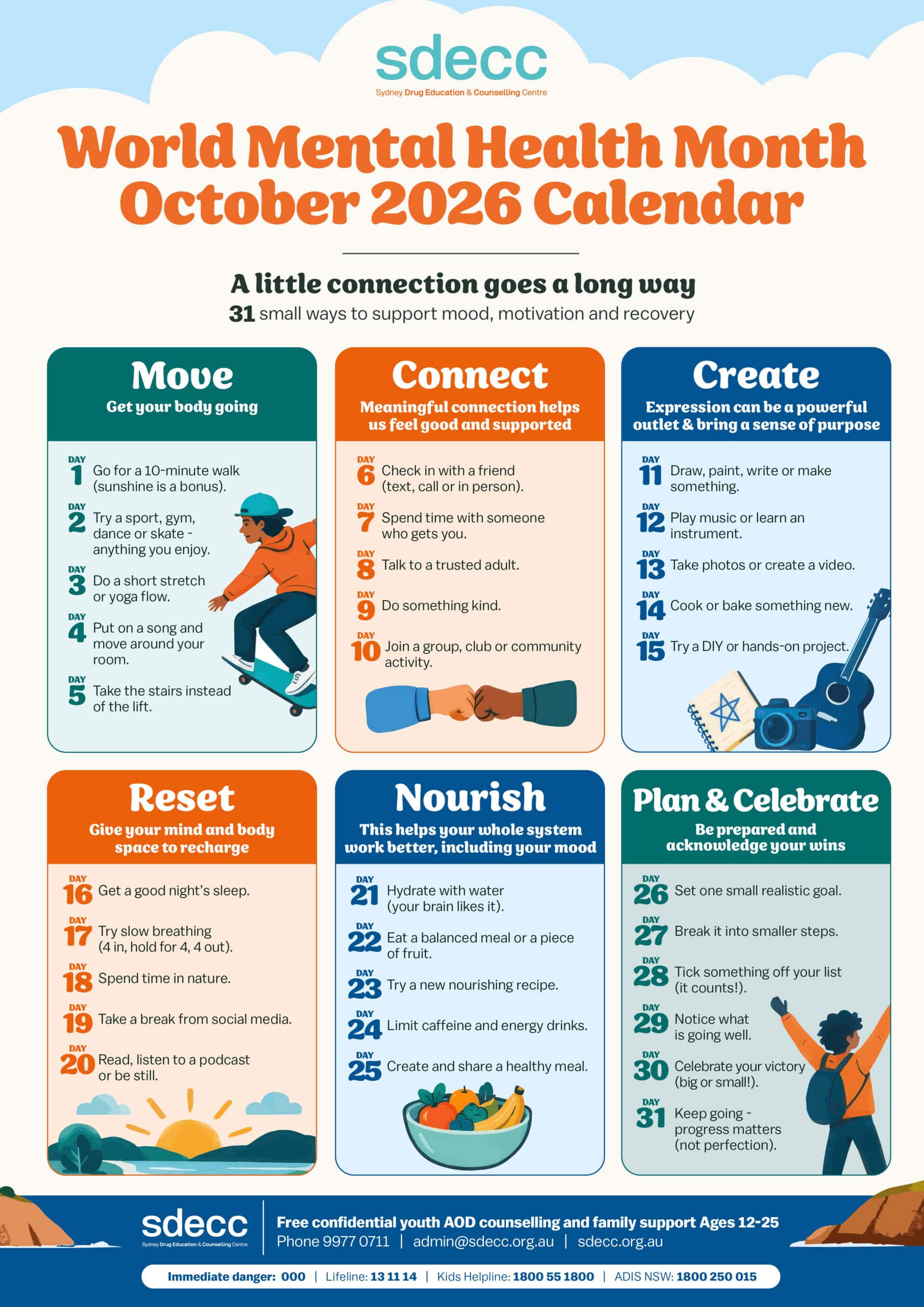
View the SDECC World Mental Health Month Calendar – October 2026